
Given it is our job and our passion, the Golf Tourism England team have visited many of the country’s great and good golf clubs, but Royal Worlington & Newmarket Golf Club was one still on the list to visit, until Andrew Cooke played a round there last week on his way to Norfolk.
Of course, we had all heard the lore of the ‘Sacred Nine’ and knew that it has been the home ground of Cambridge University Golf Club for well over a century. It was actually founded in 1893 when local landowner William Gardner invited Colonel E.W.D. Baird and Alexander Mackenzie Ross to lay out a course on a rabbit warren on his land just outside the village. The original plan was for eighteen holes, as marked out by Scottish professional Tom Dunn, but the second nine was on poorer, peatier ground and never really worked. However, the first nine, on the sandy, chalky soil that rabbits and golfers love, means that the course stays playable through the wettest of winters. This continuity of play prompted Henry Carpenter Longhurst CBE, the British golf writer and commentator, to write about the pleasure of finding the place exactly the same round after round, year after year.
The club was granted its Royal title by Queen Victoria in 1895, the same year that her son The Prince of Wales (later Edward VII) became President. Cambridge University adopted the course as its own ground in 1901, and it is said that undergraduates used to throw their clubs out of the train window as they passed the course to save carrying them when they disembarked at Mildenhall. The club eventually built its own station at Worlington in 1922.
The course’s famous pseudonym came from Bernard Darwin, who watched a match between the club and the Oxford & Cambridge Golfing Society in 1928 and declared, without hesitation, that Worlington was the best inland course in the country. He called it the ‘Sacred Nine’, and it stuck. Herbert Warren Wind, the influential American sportswriter, went further still, calling it “far and away the best nine-hole course in the world.” Whether it still earns that billing is entirely subjective, but the club’s reputation hasn’t dimmed in the ninety-odd years since.
This history and reputation are part of the club’s great appeal, clearly demonstrated by the charming clubhouse with its hole-in-the-wall bar and walls covered in photographs of the amateurs who have played there down the years, plenty of Cambridge faces among them who went on to make their names well away from golf.
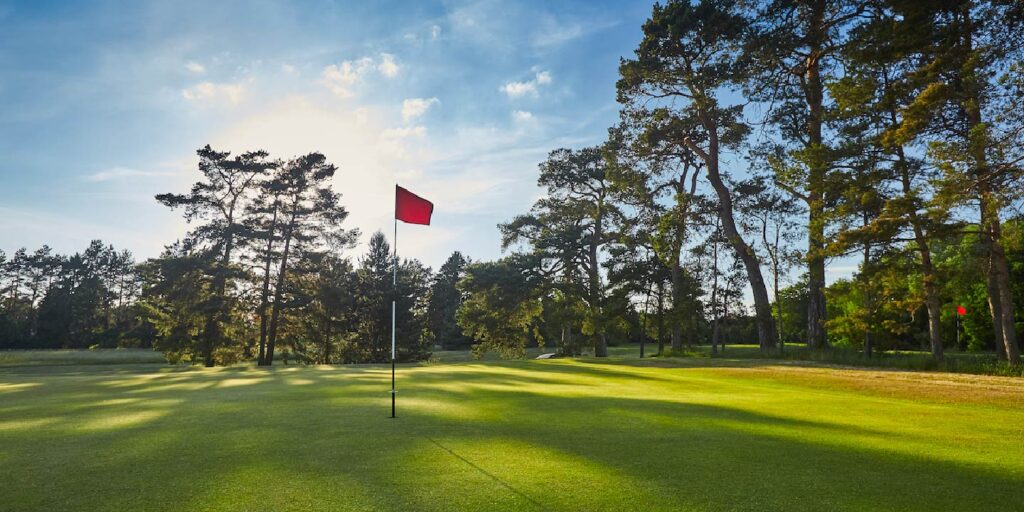
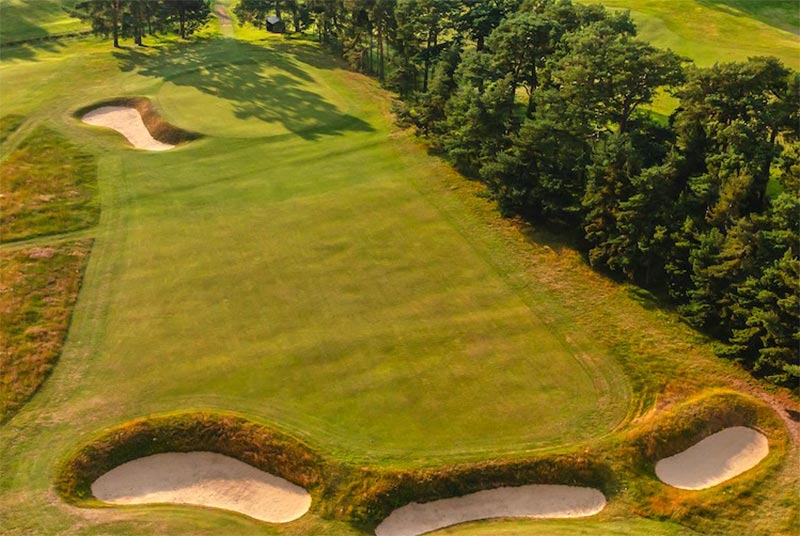
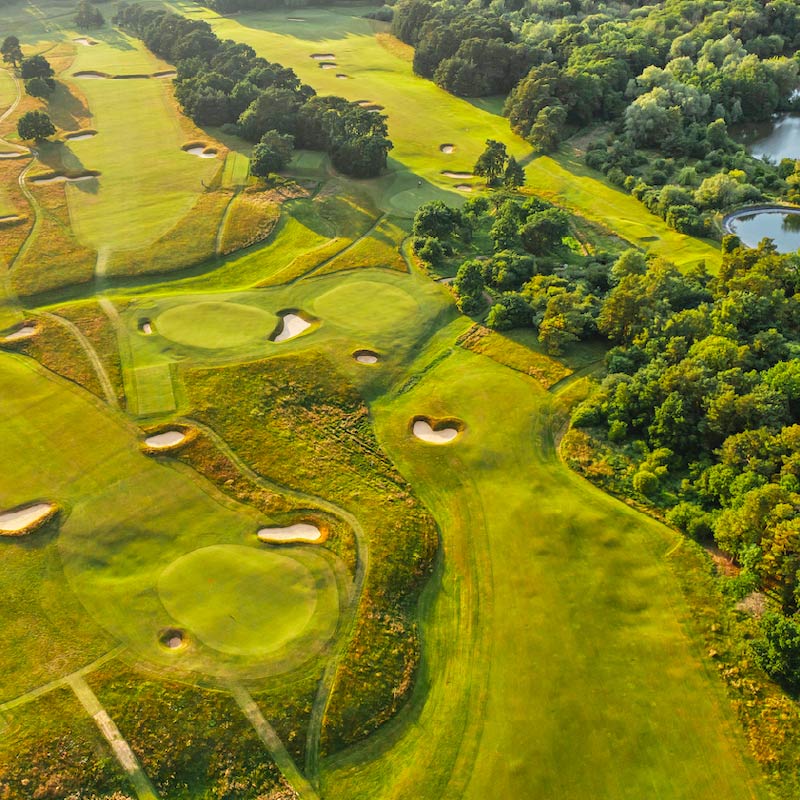
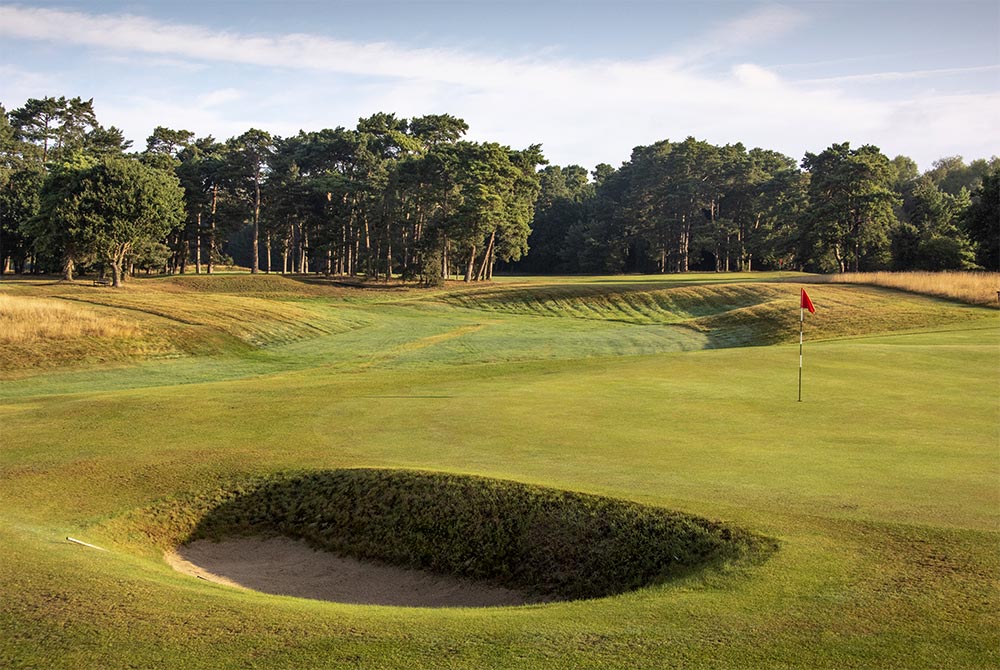
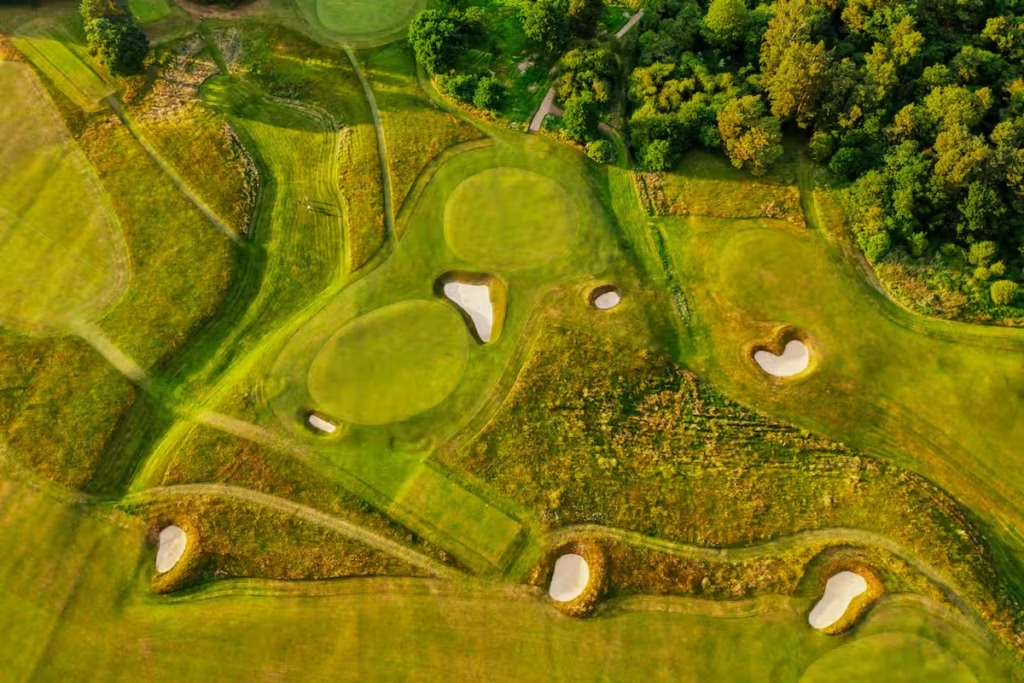
History lesson over, Andrew Cooke found it easy to see why the club is held in such regard despite being only nine holes. You start with a par five just over 480 yards, gentle enough off the tee until the green takes over — those contours turned what should have been a simple two-shot approach into three! The second is a proper test of a one-shotter, a pushed-up green that somehow gets harder to hold the nearer you get to it. The third is the hole everyone talks about, and rightly so — a hog’s-back fairway with a bunker lurking front-left, and Bernard Darwin himself rated it among the best inland holes in Britain. The fourth, stretched by Harry Colt’s work in the 1920s, brings the woods menacingly into play down the right, with a green that falls away sharply at the back right if you’re not careful. Then the fifth. Barely 150 yards, but a narrow shelf of a green sloping away on both sides — the second of Darwin’s picks, and one that Colt’s own design partner rated as close to the best short hole anywhere in the world. Standing on that tee, you understand why nobody’s felt the need to soften it since. The sixth is a proper long four, fairway bunkers splitting your line off the tee and a raised, sloped green that makes par feel earned. The seventh punishes anything loose with bunkers either side of the green. The eighth runs you past fairway bunkers to a green guarded by a run of cross bunkers that keeps going if you hit it too firm. And the ninth brings it home the way the whole round plays — squeeze your tee shot across the boundary corner, then pitch back over the public road that still runs straight through the fairway, to a green defended on both sides.
Back in the clubhouse, the team indulged in a Pink Jug, mixed at Worlington since it was invented there by John Morrison and James “Boxer” Cannon. It’s a punch rather than a cocktail in the strict sense: Benedictine and brandy for weight, Pimm’s for the colour and the herbs, lengthened historically with Moussec, more recently with prosecco, plus lemon and soda to keep the whole thing drinkable across an afternoon. Pink jugs are available to purchase so you can recreate the beverage at home.
Nine holes, one sacred reputation. Royal Worlington & Newmarket grew from rabbit-warren beginnings into a course with a royal title, a nickname coined by Bernard Darwin himself and a pink cocktail invented in its clubhouse bar. If you’re heading to Norfolk or Suffolk, it’s a stop well worth making.