

I talk about England’s golf offering a lot – mainly about the ease of access and the remarkable value. It struck me that I do not talk enough about the course architecture of the clubs. Not as museum pieces or restored interpretations, but as living, working courses, many still functioning as everyday members’ clubs, remarkably close to how they were first conceived during what the industry now recognises as the Golden Age of course design.
It is also the most powerful commercial argument we have — and it resonates with two audiences who matter most: golf tour operators looking for itineraries that can compete with Scotland and Ireland on authenticity, and English golf clubs sitting on extraordinary heritage without fully understanding how to turn it into bookings.
England as the Working Archive
Between the late 19th century and the interwar years, England became the creative laboratory of the game. The architects who shaped the Golden Age — Harry Colt, Alister MacKenzie, Herbert Fowler, Willie Park Junior, J.F. Abercromby — were working here at the height of their powers. What makes England different is not simply that they built here, but that so many of their courses survived largely intact. The landforms remain. The strategy remains. The intent remains.
England is, in effect, a working archive of golf design — where golfers are not studying history, they are playing it. These courses ask them to weigh the same dilemmas their architects intended a century ago. That authenticity is rare, and it is increasingly what premium international travellers are actively seeking.
The Architects: Who They Were and Why They Matter
People ask me which is my favourite course in England. I genuinely cannot answer. It is a bit like being asked to choose a favourite child — you love them all, for completely different reasons, and you know better than to say so in public. What I can tell you is that the architects behind England’s finest courses share something that makes the question so hard: they were each, in their own way, extraordinary. Here is why each of them matters commercially.
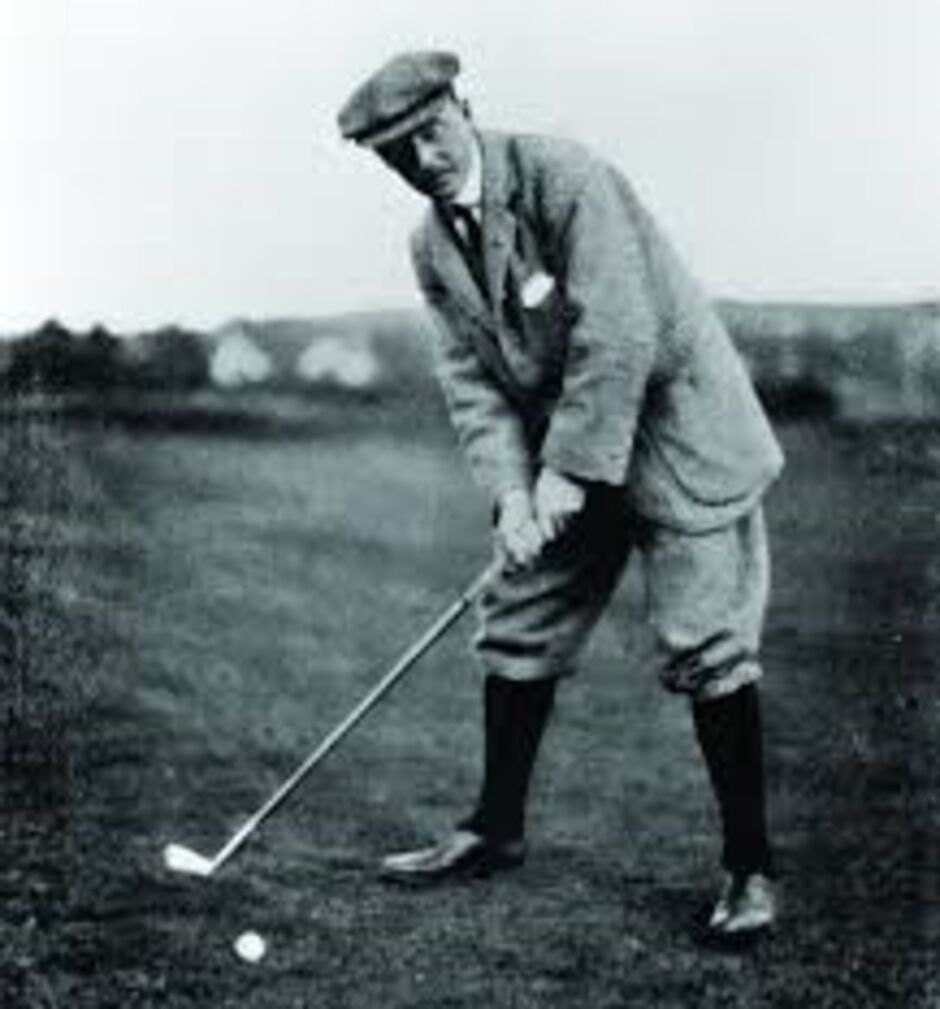
Harry Colt (1869–1951)
If there is a single architect whose fingerprints define England’s golf landscape, it is Colt. A Cambridge-educated barrister who gave up law to become Club Secretary at Rye — and later Sunningdale — he went on to design or revise over 300 courses across six continents. His England portfolio alone is staggering: Sunningdale Old and New, Wentworth East and West, Swinley Forest, St George’s Hill, Moor Park, Camberley Heath, Rye, Blackmoor, Brancepeth Castle, Woodhall Spa, Royal Liverpool.
His genius was the absence of artifice. He described Swinley Forest — one of the purest expressions of heathland design in the world — as simply “the least bad course I have ever designed.” His bunkers were placed for strategy, not theatre. For US operators, the hook writes itself: Colt co-designed Pine Valley. Any American golfer who has played it — or spent a lifetime aspiring to — already has a relationship with his thinking. Playing a Colt course in England is playing the same mind in the landscape where he developed it.

Alister MacKenzie (1870–1934)
MacKenzie is the architect most American golfers know best — even if they don’t always realise they know him. Augusta National. Cypress Point. Royal Melbourne. Three of the greatest courses ever built, by the same Yorkshire doctor who served as a military surgeon in the Boer War — an experience that sharpened his eye for camouflage and concealment, which he later applied directly to bunker design. He died two months before the first Masters in 1934, never seeing Augusta host a major.
What the American market underestimates is that his genius was born in England. His first course was Alwoodley in Leeds, opened in 1907 and largely unaltered today. His second was Moortown, which hosted the first Ryder Cup on British soil in 1929. The Alwoodley 10th served as the direct prototype for Augusta’s 13th — documented, specific and exactly the kind of story that transforms a round of golf into something a traveller recounts for years.

Herbert Fowler (1856–1941)
Fowler is the least internationally recognised of this group, but among those who study architecture seriously he is held in the highest regard. His masterwork is Walton Heath Old — power and subtlety on the Surrey heathland, host of the Ryder Cup and multiple European Opens, still playing close to Fowler’s original vision. He also designed Saunton East and West in Devon and the Red and Blue courses at The Berkshire alongside Tom Simpson.
His philosophy was absolute respect for the land — routing courses with natural contours rather than against them. A round on a Fowler course rarely feels manufactured. It feels as though it was always going to be there.
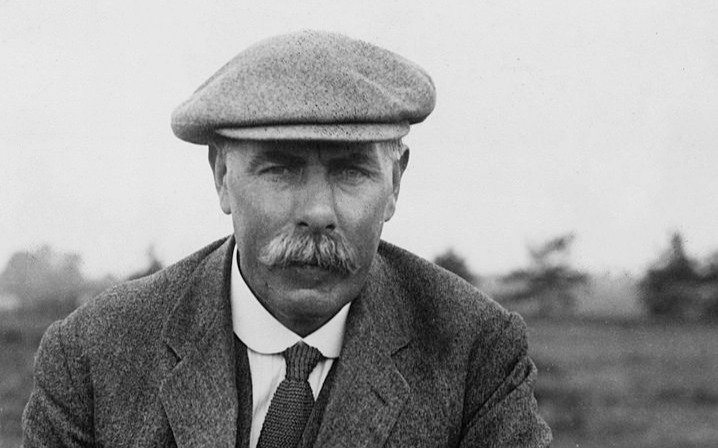
Willie Park Junior (1864–1925)
Park sits slightly outside the familiar Golden Age narrative — but he arguably started it. Son of the inaugural Open Champion, he won The Open himself in 1887 and 1889, then turned to design with the same rigorous thinking that had made him a champion. He is widely regarded as the first professional golf course architect, working at a time when course design was still mostly instinct and tradition.
His finest English work includes Huntercombe in Oxfordshire — largely unchanged since 1901 and one of the purest surviving examples of Edwardian course architecture — and the original Sunningdale Old Course, laid out in 1900 before Colt later refined it. The principles Park first articulated are the foundations Colt and MacKenzie built upon. Playing Huntercombe is playing the beginning of the Golden Age.
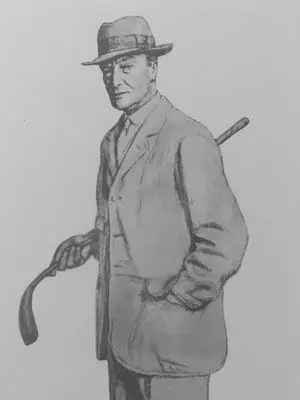
J.F. Abercromby (1866–1935)
Abercromby’s masterpiece is Worplesdon in Surrey, host of the Curtis Cup and consistently rated as one of the finest inland courses in England. He also designed Addington — worshipped by lovers of strategic complexity, baffling to those who prefer pastoral calm. Both courses have a cult following among architecture obsessives, which is itself a commercial proposition.
His belief: a great hole should offer multiple routes and reward the brave. His courses reveal new layers every time you play them. For the golfer who has done the famous names and wants to go deeper, an Abercromby is the mark of genuine connoisseurship — and a story an operator can sell as exactly that.
A Note to Golf Clubs — and to Tour Operators
Too many English golf clubs are sitting on extraordinary architectural heritage and not using it. Members know what they have; domestic demand is often strong; there is a certain reluctance to shout about things that feel self-evident from inside the gate. But the international visitor market operates completely differently.
Every golf tour operator who has visited England on a GTE FAM trip tells us the same thing: they arrived expecting good golf and left astonished by what they found. That gap is not a failure of the courses. It is a failure of communication. The fix is straightforward: know your architect. Know when your course was built or revised and how much of it is original. Know which holes are considered the designer’s finest work and be able to say why. If your course has a documented connection to a famous American club — a shared architect, a specific hole that served as prototype — that connection belongs front and centre in your visitor communications, your operator briefings and your GTE profile. Not buried in the clubhouse history.
Clubs that tell this story well are more bookable. They command higher green fees, anchor longer itineraries and generate the repeat visit business that underpins sustainable visitor revenue. Not “a historic course” — but “a Harry Colt design, the architect of Pine Valley, largely unchanged since 1923.” That level of specificity is what converts passing interest into a confirmed booking.
For US operators, the pitch is one that Scotland and Ireland simply cannot make. The Golden Age of golf course architecture was born in England, shaped by English architects — and one Yorkshire doctor — and survives more completely here than anywhere else in the world. Harry Colt designed Pine Valley. Alister MacKenzie designed Augusta National. These are not incidental footnotes — they are the foundations of American golf architecture. The courses where these men developed their ideas are in England.
A week in Surrey covers five or six Colt-era courses of international significance within twenty miles of Heathrow. A week in Yorkshire plays the MacKenzie originals and includes Ganton — described by Ben Hogan as the finest course he had ever played. An England golf trip built around this story does not feel like a holiday. It feels like a pilgrimage. And that is precisely the emotional territory that justifies premium pricing, generates repeat visits and produces word-of-mouth endorsement that no marketing budget can replicate.