Courses
Dunstanburgh Castle Golf Club
Sea Lane, Embleton, Alnwick, Northumberland, NE66 3XQ
Yards; 6,287 Par 70
James Braid
Contact
Dunstanburgh Castle Golf Club
| Location | Embleton, Northumberland, England (NE66 3XQ) | Course | 18 holes, links, par 70, c. 6,300 yards |
|---|---|---|---|
| Designer | Laid out 1900; extended to 18 holes by James Braid in the early 1920s; design consultancy from Jonathan Gaunt since 2016 | Setting | Area of Outstanding Natural Beauty & Site of Special Scientific Interest, beside Dunstanburgh Castle |
| Recognition | Featured in Top100golfcourses.com’s England rankings | Access | Open to visitors, societies and open competitions; c. 6 miles from the A1 near Alnwick |
Dunstanburgh Castle Golf Club has played over the links at Embleton, on the Northumberland coast, since 1900, when the original nine holes were laid out in the shadow of the 14th-century Dunstanburgh Castle ruins. James Braid became involved in the early 1920s, extending and refining the layout into the 18-hole course that survives today, with course architect Jonathan Gaunt advising on further design improvements since 2016.
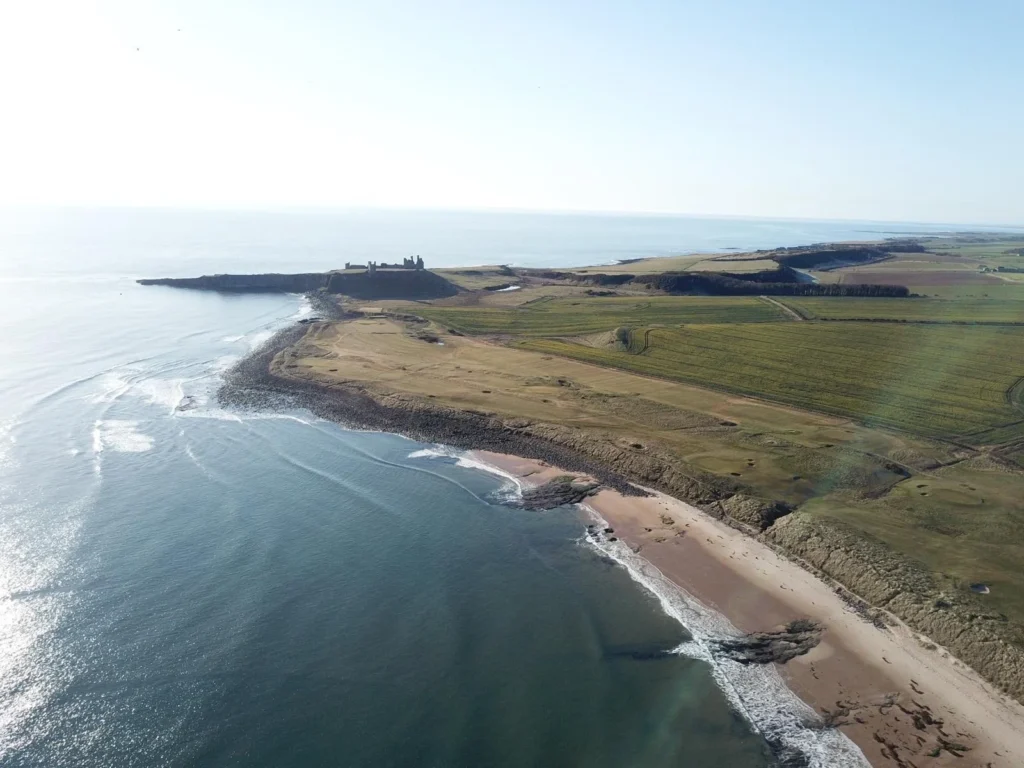
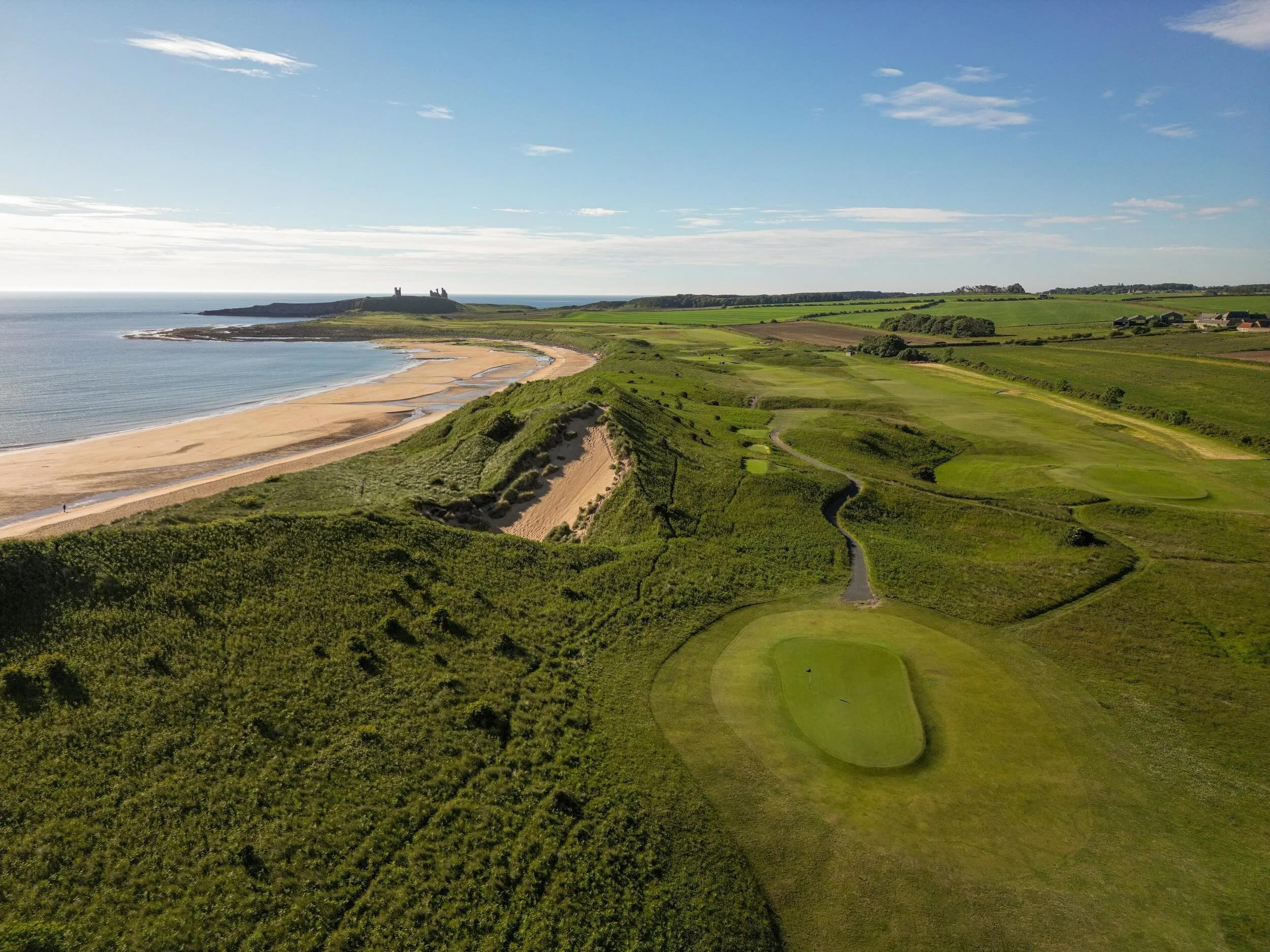
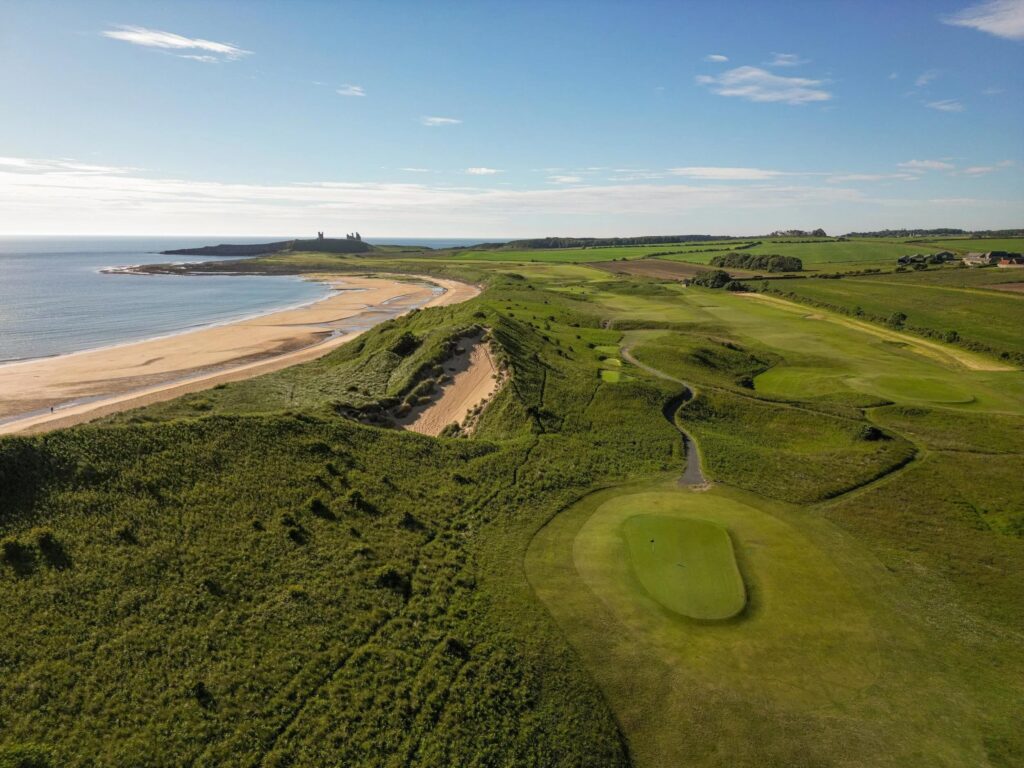
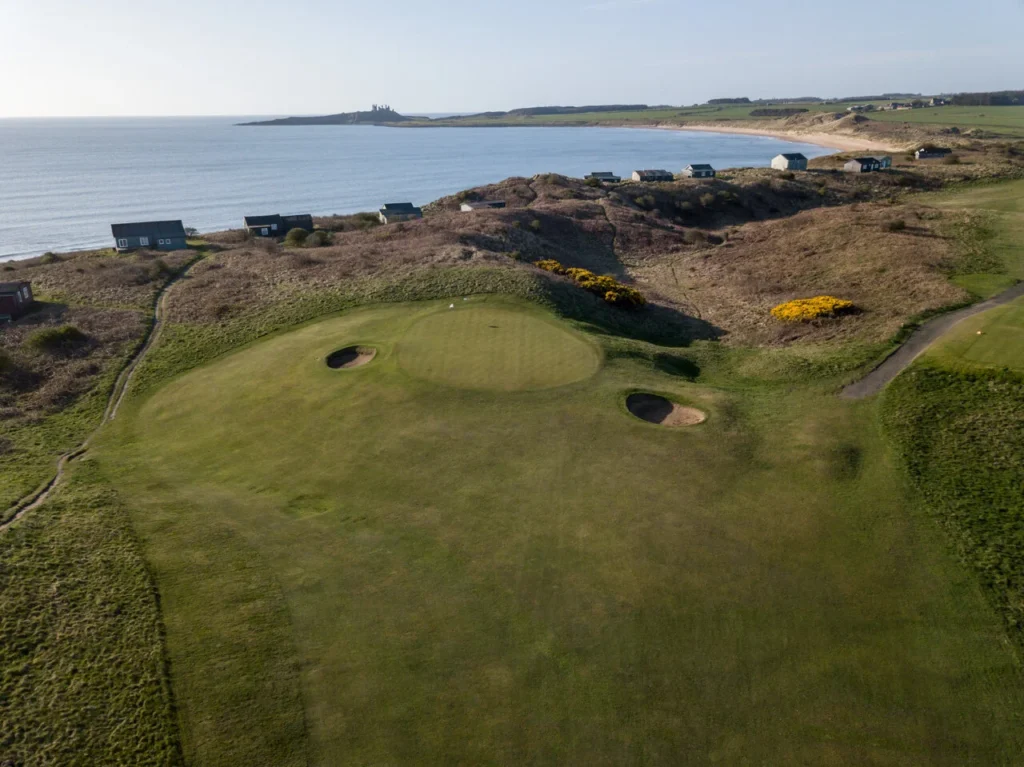
The links sit within a designated Area of Outstanding Natural Beauty and a Site of Special Scientific Interest, running along Embleton Bay with the ruined castle visible from much of the course. Gorse, sea winds, pot bunkers and contoured greens make the most of the natural dunes, while the exposed coastal position and free-draining turf keep play possible through most of the year.
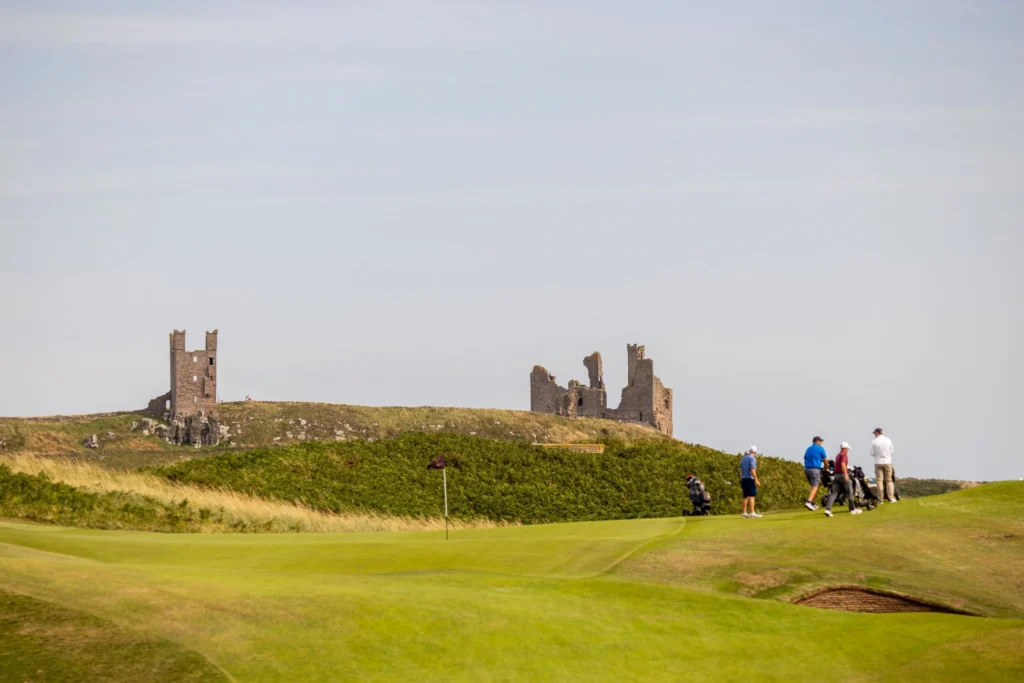
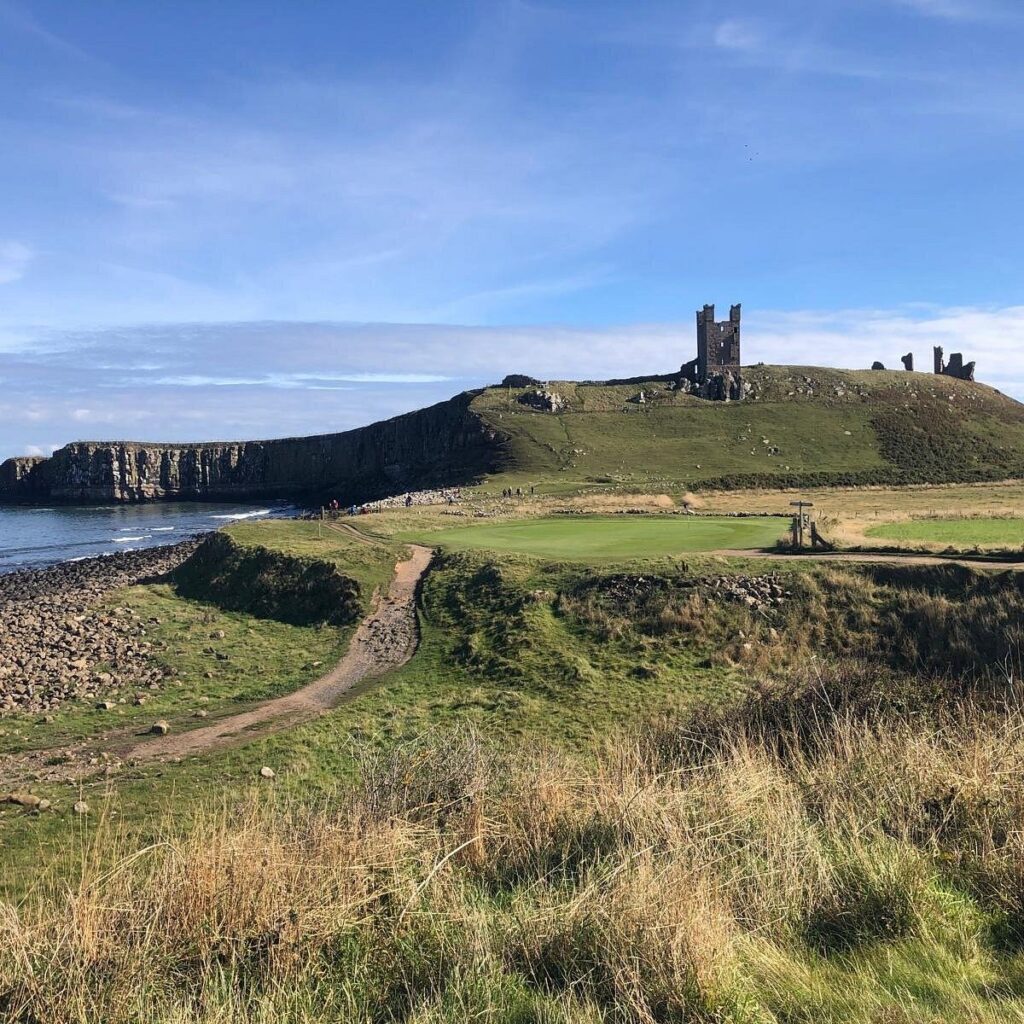
The course carries just three par 3s and a single par 5 across its eighteen holes, with light bunkering left to do less of the defensive work than Northumberland’s shifting sea winds. The 6th, a dogleg left played from an elevated tee, is the course’s stroke index one, while the short 4th demands real accuracy into a plateau green. The homeward stretch threads eight holes along the water’s edge, shielded from the beach by rising dunes, before the 13th — a tightly guarded par 3 played with the castle ruins looming behind the green — provides the course’s signature photograph. The lone par 5, the 17th, sets up a testing finish at the 18th, where a burn crosses in front of a green that sits hard against the out-of-bounds.
At around 6,300 yards and a par of 70, the course rewards accuracy over length and has built a following among links enthusiasts — in the club’s own words, “one of links golf’s best kept — and best value — secrets” in the North East. Top100golfcourses.com has featured the layout among its England rankings, and reviewers have echoed that verdict: one assessment called it “the real deal when it comes to links golf… one of the most enjoyable I’ve played.”
The castle that gives the club its name predates the course by nearly six centuries. Thomas, Earl of Lancaster began building it in 1313, and John of Gaunt — no relation to the club’s own course architect — strengthened it with a new gatehouse and drawbridge in the 1380s, before it changed hands more than once during the Wars of the Roses and later fell into ruin.
The club is open to the public, with some of the best-value green fees on the Northumberland coast, and a clubhouse that serves food and drink to visiting golfers and coastal walkers alike. Tee times can be booked online and, alongside visitor and society bookings, the club hosts open amateur competitions through the season. Located near Alnwick and around six miles from the A1, the course is a straightforward stop for clubs travelling the Northumberland coast.
For English golf clubs and societies looking for a genuine links test against one of the country’s most photographed backdrops, Dunstanburgh Castle offers a day of golf that few courses in England can match for scenery — at a course that has built its reputation on value as much as its setting.